Most leaders I know can tell you, without much prompting, that the pace they’re keeping can’t last. Then they get up the next morning and do the same thing. I did this for years before I asked where the pattern came from. When I finally did, I found it was about 250 years older than me.
We inherited a definition of work, then stopped questioning it. For most of history, “productivity” described a farm’s capacity, closer to fertility than to efficiency. The factory changed that. Hours became the unit to manage, and slowness became a synonym for laziness. Then the American Dream added the promise that enough grit would get you anywhere.
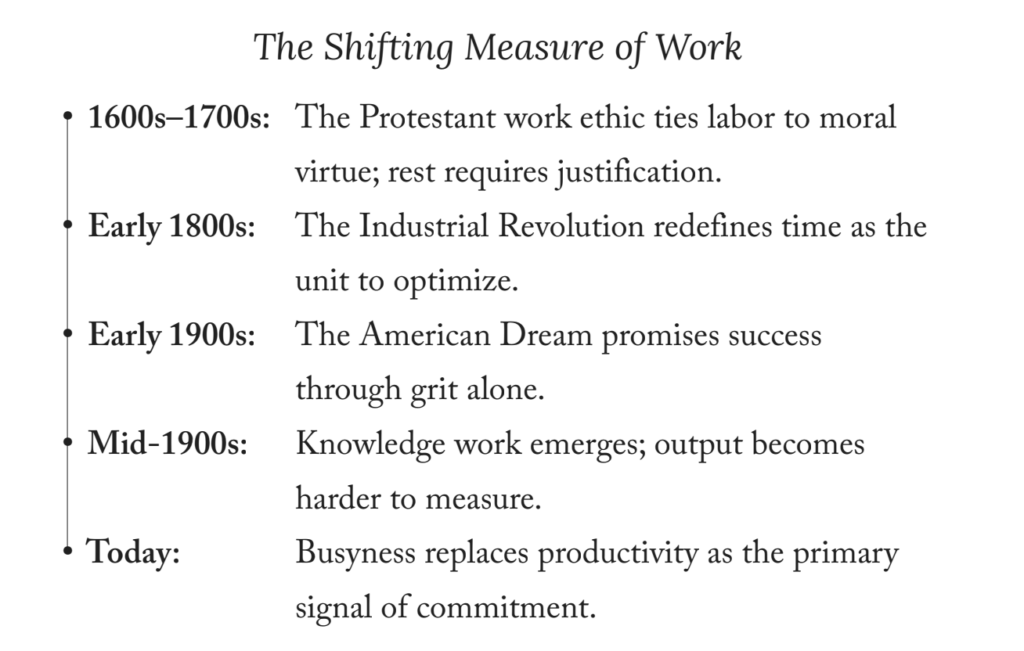
Knowledge work broke the measuring stick, so busyness took its place. Our work lives in conversations and judgment calls, and very little of it can be counted. So we count what we can: messages answered, meetings attended, items checked off. Motion can be tracked, so motion starts to feel like progress.
Burnout isn’t a personal failure, but we treat it like one. When the exhaustion shows, we reach for better discipline, a better system, a meditation app. A standing desk doesn’t change how many decisions we make in a day, or how many people are waiting on us for an answer.
Inherited, not required. We can’t change the culture fast enough to help, but we don’t have to accept everything we inherited. The first step is noticing which parts of your week need your judgment, and which only need your involvement.